- Home
- Things to carve
- Bigfoot wood carving
Huggy Bigfoot wood carving tutorial
A friendly Sasquatch with a warm personality.
LEVEL: SOME CHALLENGES
Bigfoot wood carving just got way cuter! This little whittle isn’t lurking in the woods—he’s standing there giving himself a hug with big goofy eyes and that sweet nose. Downright lovable! He’s full of that ”you can’t help but smile at him” kind of charm.
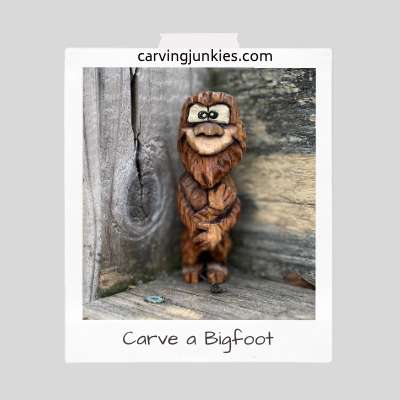
In this tutorial, you’ll go step by step from the first cuts all the way through the details that give him his big personality. And when it’s time to bring him to life, I’ve got you covered with my full painting guide at the end of this page so you can get your cuddly look just right.
If you’re in the mood to carve something a little different from the traditional Bigfoot that’s full of character, try this tutorial.
Bigfoot wood carving supplies
For this Bigfoot wood carving, I used a piece of basswood that was 1.25 x 1.25 x 4 inches (3.2 x 3.2 x 10.1 cm). You will need something to write with—and a ruler—to sketch your design. Or, you can use the free pattern at the end of this tutorial to trace your design. The pattern is also handy if you want to carve a much larger Bigfoot and use a band saw.
I always recommend that you wear a protective carving glove and cover your lap with something hard, if you are a lap carver. Accidents can sometimes happen!
Grab your favorite wood carving knife to get started. Tip: I switched from a roughout knife to a detail knife to cave the face. I also used a soft V-tool for the beard and hair, but provide suggested options for knife only wood carvers.
Key steps
Check out this short video slide show to see the key steps to carve your Bigfoot—all in one place.
Set up your Bigfoot wood carving
You will be carving off the corner for this Bigfoot to give you a ready-made plane for the nose.
First, sketch your guidelines. The front part of the head (photo 1) will be lower than the sides (photos 1,2) and back (photo 4). I’ve reserved wood on the front to carve his “pointy” beard.
I made my lowest point on the beard about 2 inches (5 cm) from the top. My sides and back are about 2 inches (5 cm) front the top. I sketched lines on the front that wrap around the sides (photos 1-3) that are about 3/4-inch (1.9 cm) from the bottom to mark the top of the feet.
Tip: If you are new to wood carving, you can mark “front” and “back“ on your wood block to make sure carve the correct side.
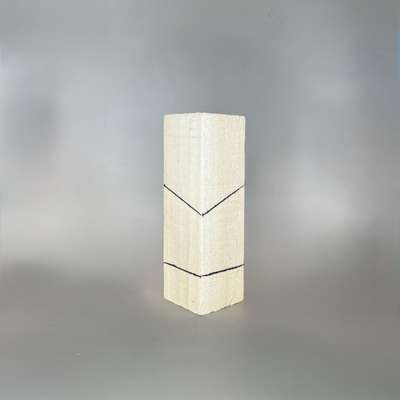 1. Front guidelines
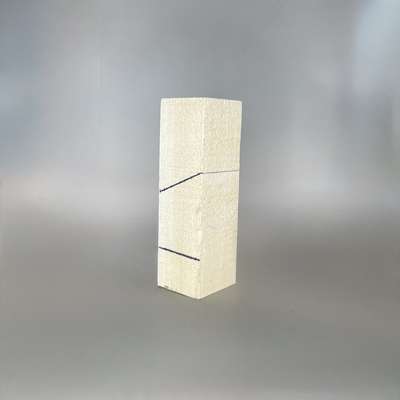 2. Right guidelines
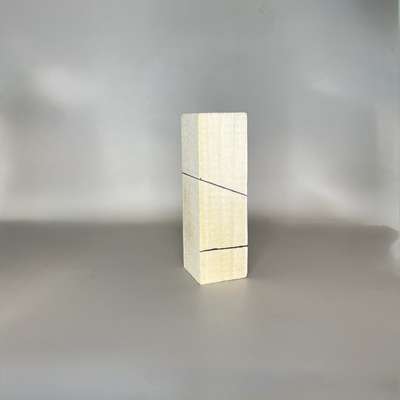 3. Left guidelines
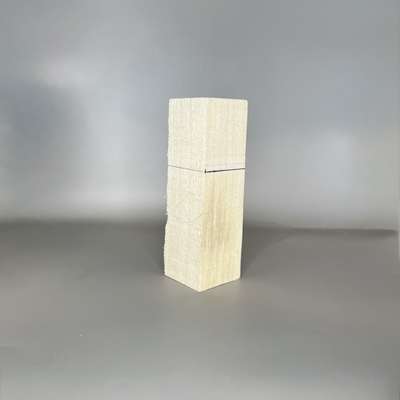 4. Back guidelines
Make your first cuts
Separate the head all around (photo 5). I used stop cuts but you could also use a gouge here. If you use a knife, you may want to start in the corners and work your way toward the middle.
Using the same technique, separate the feet on the front and sides (photo 6).
Now, you can round off all the corners (photo 7).
Add a cut line to the front (photo 8), to mark where you will carve back the eyes. Mine is about 3/4 of an inch (1.9 cm) from the top. Add another cut line to the middle to guide placement of the arms (photo 8). Mine is about 1.5 inches (3.8 cm) from the bottom. A third cut line is about 1/2 inch (1.3 cm) from the bottom to mark the top of the feet (photo 8).
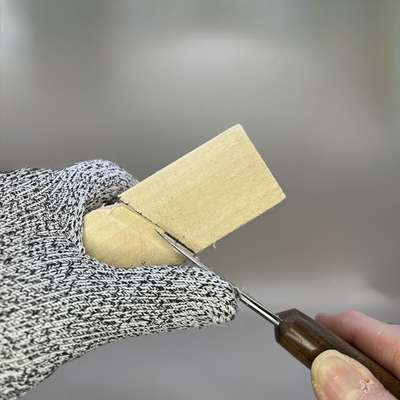 5. Separating the head
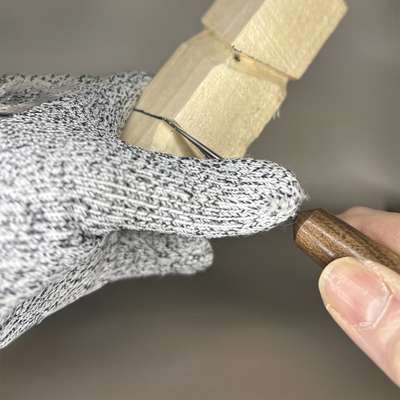 6. Separating the bottom
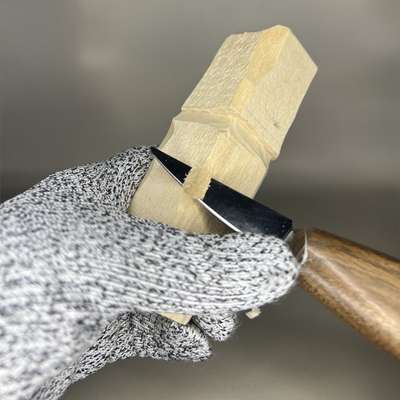 7. Rounding the corners
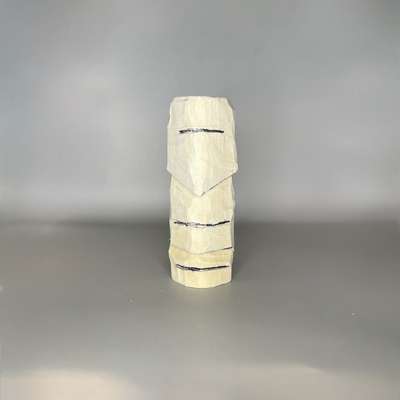 8. Cut lines are drawn
Carve the head
Use a stop cut (photo 9) to start the eye socket for your Bigfoot wood carving (tip: rock your knife back and forth to make a deep cut). Meet your cut to remove wood (photo 10). Tip: you may want to turn your piece upside down for greater control.
Sketch some facial features (photo 11) before you shape the top of the head (completed in photo 12). I rounded the top and made sweeping cuts, twisting my wrist to creat the indented curves on each side of the head. Be sure to shave some wood off the top end grain, or it won’t hold paint well. Note: I removed the eyebrows to give more room for fur. Once the head is shaped, sketch the arms and fingers and where you will split the legs (photo 12).
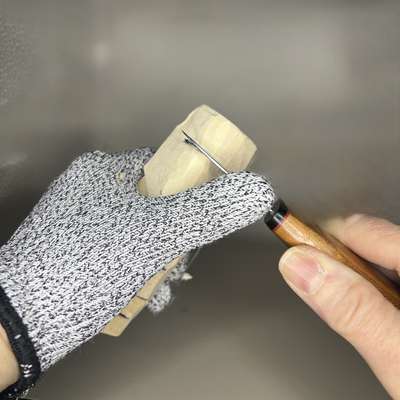 9. Making stop cut
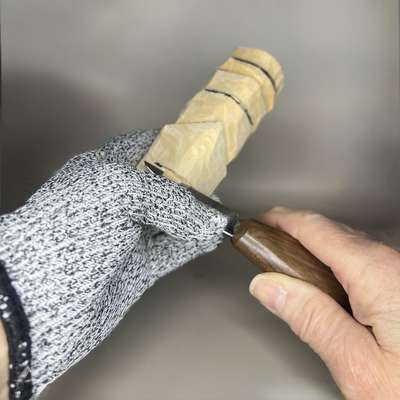 10. Meeting stop cut
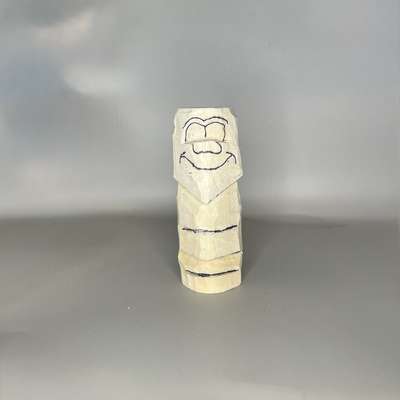 11. Face is sketched
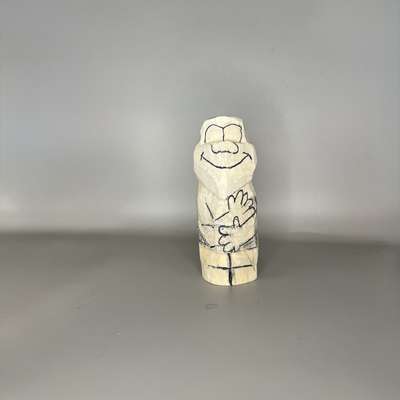 12. Details are added
Carve the arms
Separate the arms. I started with stop cuts (photo 13). Carefully separate the fingers (photo 14). You can use small pyramid cuts here. Work your way around until the arms and fingers are separated.
Remove wood off the shoulders before you carve the back of the arms (photo 15).
Split the legs (photo 16) but don’t cut all the way through to keep your piece stable. I used V-cuts here.
Use a stop cut on the top of the feet (photo 17) and remove wood up to your cut. Carefully make narrow V-cuts to split the toes. Be super careful to avoid cracking the wood here!
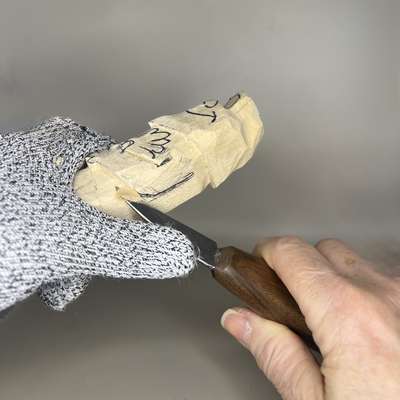 13. Separating the arms
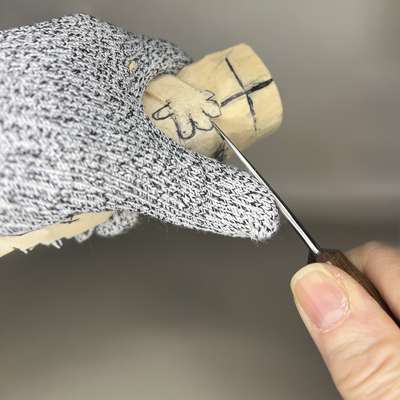 14. Separating the fingers
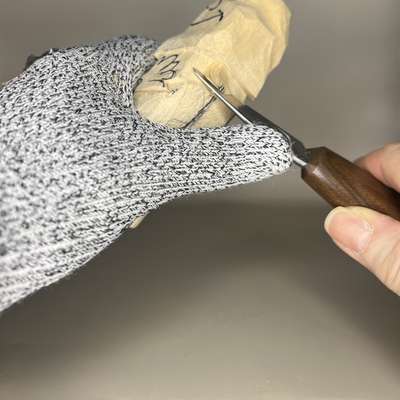 15. Carving the shoulder
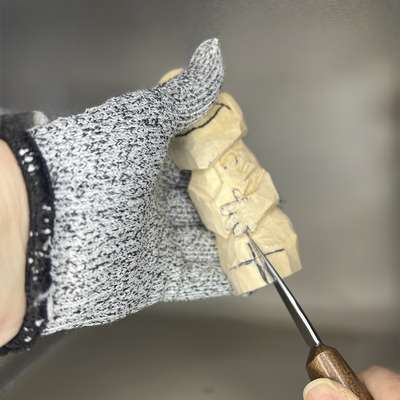 16. Splitting the legs
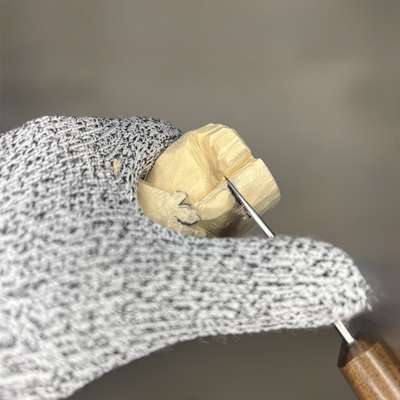 17. Carving the foot
Shape the body of your Bigfoot
Carve the back of the arms (photo 18). I used stop cuts and made a second slicing cut to remove the wood. You could also use a pyramid cut here, or use a gouge.
Split the legs on the back (19) a V-cut.
Narrow the body of your Bigfoot wood carving, turning the piece regularly to check for symmetry (completed in photos 20,21).
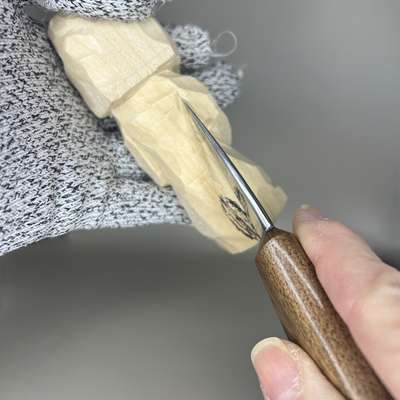 18. Carving the back arms
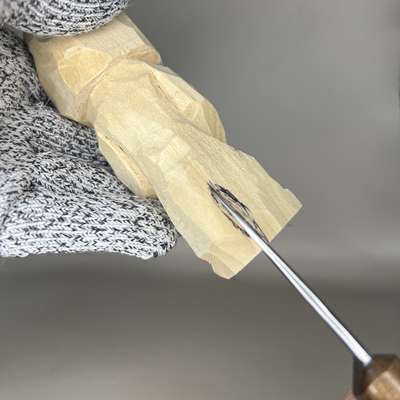 19. Splitting the back legs
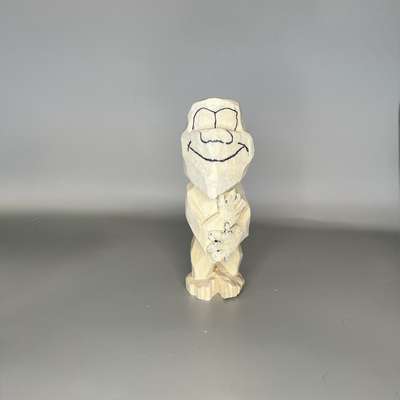 20. Front progress
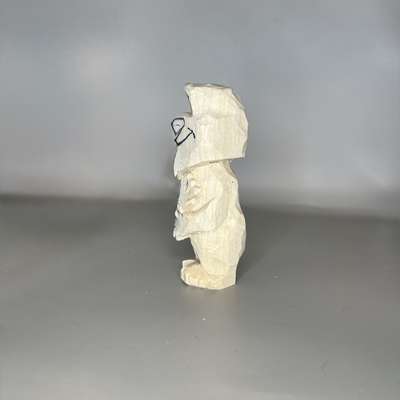 21. Progress from side
Carve the face
Separate the nose. I switched to a smaller detail knife and ran my knife along the guideline (photo 22), removing wood from underneath (photo 23).
Use the same method to separate the eyes (photo 24) and mouth (photo 25).
Optional: I used a micro U-gouge to carve the nostrils (completed in photo 25), carefully turning the gouge and removing wood from underneath using a knife. If you don’t have a gouge you can hold your knife like a pencil to carefully make a curved cut.
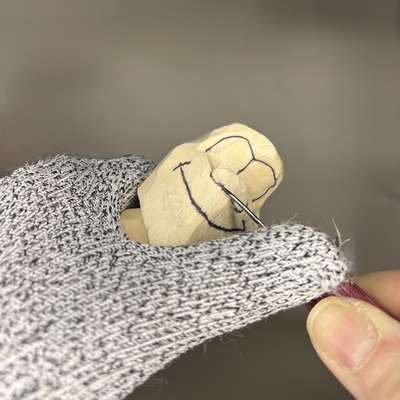 22. Separating the nose
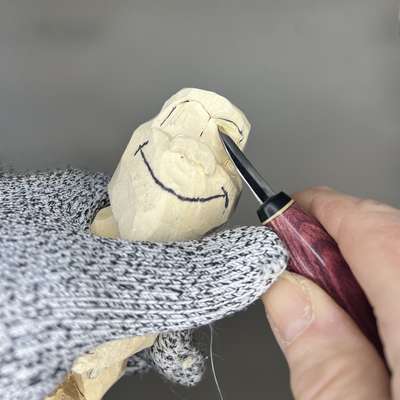 24. Carving the eyes
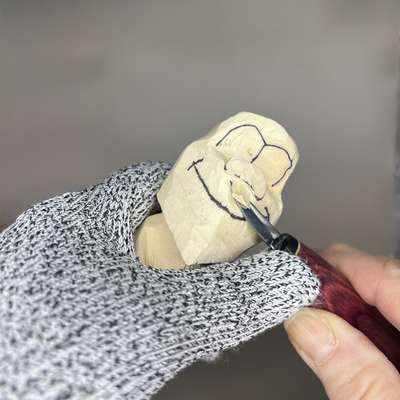 23. Removing wood
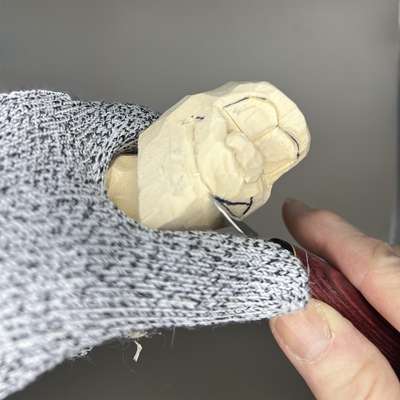 25. Carving the mouth
Add the hair
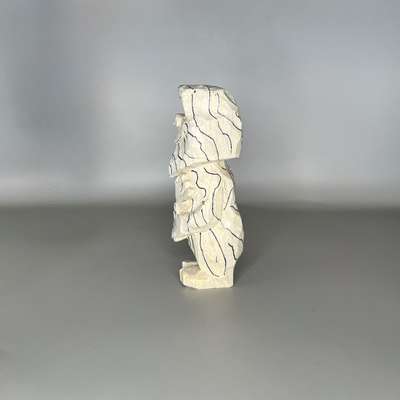
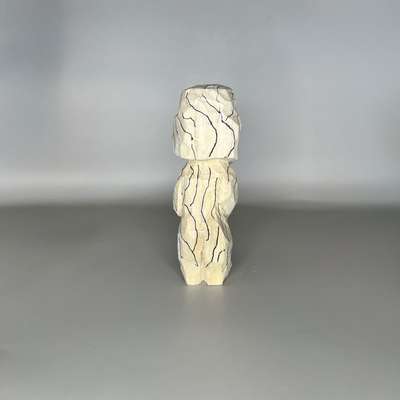
Using a pencil roughly sketch the hair lines (photos 26-29). I used some curvy “S” lines to create flow in the beard (photo 26).
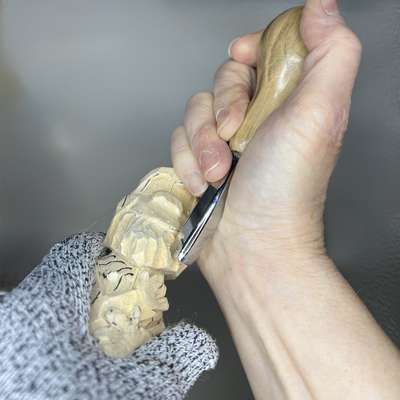
I used a soft V-tool to carve the hairlines (photo 30). By holding it upside down, I have more control over my cuts. If you don’t have a soft V-tool, you can use your knife. Make a slicing cut and remove wood from around your cuts. You can also try making wide V-cuts.
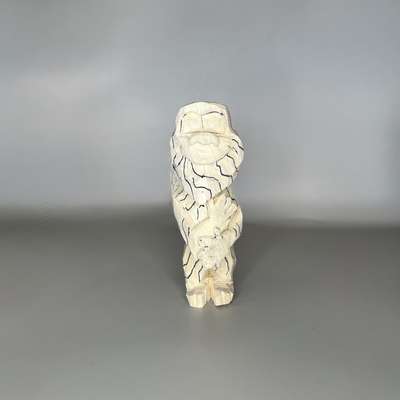 26. Front hair lines
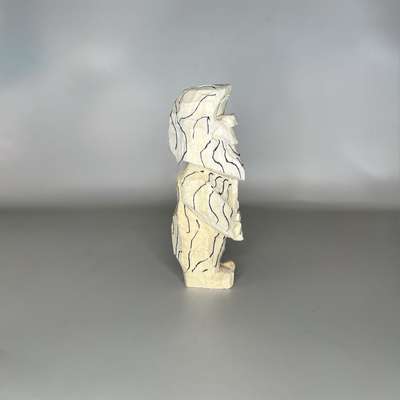 27. Right view
 28. Left view
 29. Back view
 31. Carving the hair
Refine your Bigfoot wood carving
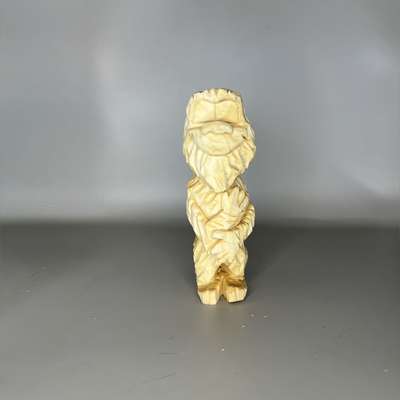
Refine your carving all around. I cleaned up the hands and fingers, shaped the feet, and flattened the eye sockets a bit further. Photos 31-34 show my Bigfoot wood carving prior to painting.
 31. Front view of Bigfoot
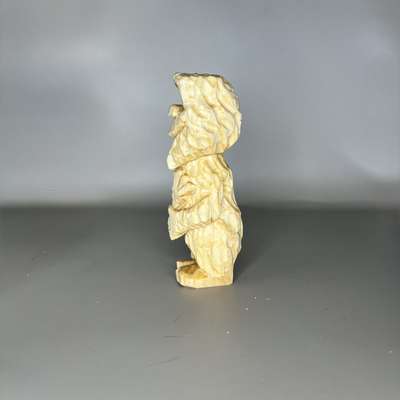 33. Left view
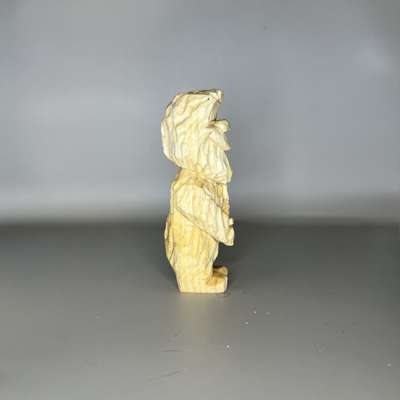 32. Right view
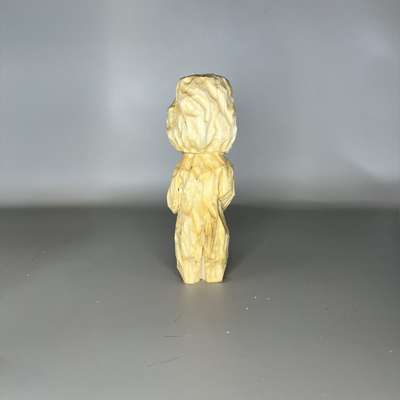 34. Back view of Bigfoot
Finish your Bigfoot
Before painting, I brushed my Bigfoot wood carving with walnut oil and let it dry overnight. Here are the colors I used if you want a similar look. I built my colors in layers using acrylic paint washes. For excellent painting tips, read this.
- Eye sockets: FolkArt french vanilla 100% paint.
- Pupils: Ceramcoat black 100% paint applied with the round end of a toothpick. After drying, I added a slightly smaller dot of Ceramcoat 100% paint in sage green for the iris. Allow to dry and add a smaller dot of the black paint. Let dry and finally use a toothpick with the french vanilla.
- Body crevices: FolkArt dark brown wash.
- Body: FolkArt burnt sienna wash.
- Nose: dark brown wash.
- Lip line: dark brown 100% paint.
- Face: DecoArt cocoa wash (layer 1) and Crafter’s Collection almond cream wash (layer 2). I also used the almond cream for accents on hands, chest, toes, and face.
- Optional: After allowing my paint to dry thoroughly, and spraying the piece with 2 coats of polyurethane spray, I used “turd polish.” It’s a mixture of 3 parts Minwax Aged Oak Gel Stain and 1 part mineral spirits. I used a soft toothbrush to apply the mixture and wiped it off quickly with paper towels. Throw the towels away outside your home as they can self-combust!
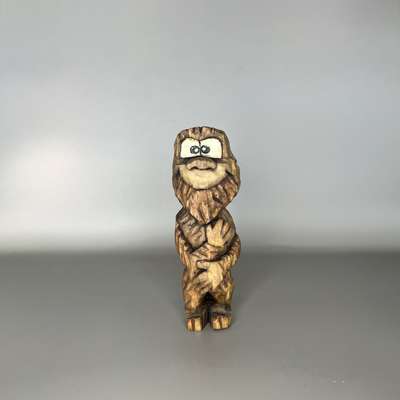 35. Front of Bigfoot
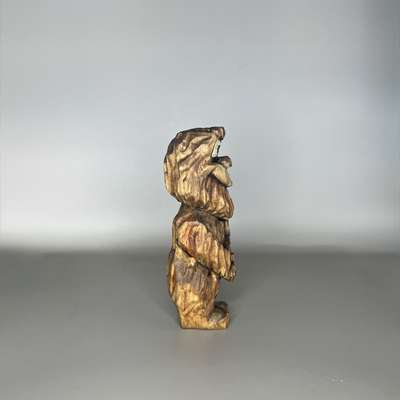 36. Right view
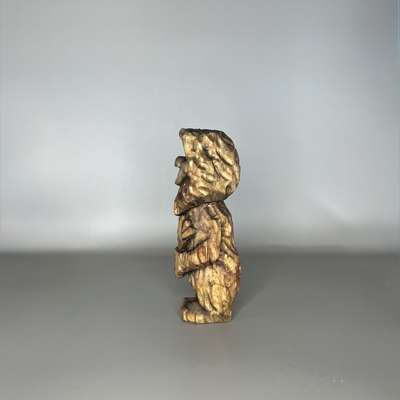 37. Left view
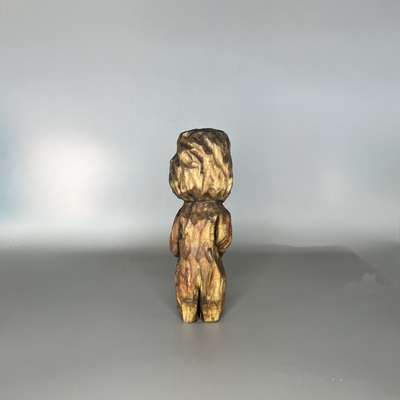 38. Back view
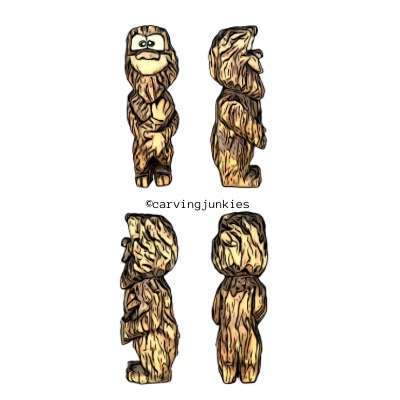
Bigfoot wood carving pattern
You can use this pattern to sketch your Bigfoot or use with a band saw. Photocopy it to size to fit your wood block.
You might like these
Four-Leaf Clover Wood Carving Tutorial
Easy four-leaf clover wood carving tutorial to make a fun decoration with a knife and a block of wood.
Try these knives!
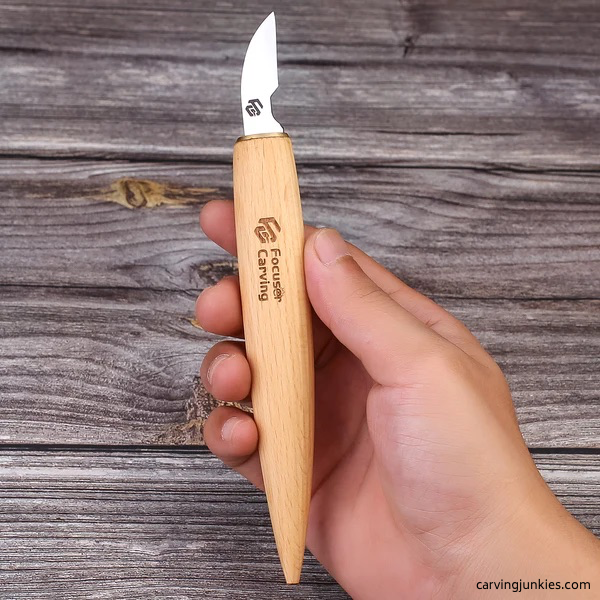
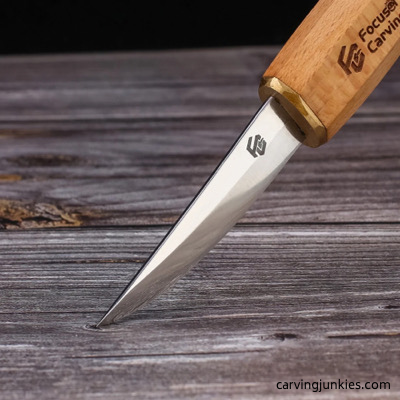
Focuser Carving knives are easy to use and hold an edge extremely well. They are also very sturdy, which is awesome for beginners! The FC001 is a great all-around carving knife. The FC016 is my go-to for making clean pyramid cuts with ease. I use the FC015 when I need to remove a lot of wood without too much effort. If you buy a knife with these affiliate links you help support our website without any extra cost to you. Thanks!

Get 50 Wood Carving & Painting Tips when you join our FREE Covered in Chips club.
Share this page
carvingjunkies.com never sells your personal information.
This site uses cookies for its operation and to enhance your experience. As an Amazon Associate and Focuser Carving affiliate we earn from qualifying purchases.
Home | About Us | Privacy Policy | Terms of Use | Contact | Sitemap