- Home
- Things to carve
- Carve a hillbilly
Carve a hillbilly caricature
Short on teeth, big on charm.
LEVEL: SOME CHALLENGES
Carve a hillbilly that's full of fun from the very first cut! This little whittle features a goofy nose, floppy hat, and a pair of well-worn overalls that give you plenty of details to work with. You will be shaping the beard with a some artistic freedom (optional) and adding a big-toothed, gritty grin – minus a few teeth.
Follow along, trust the process, and you’ll be delighted how good your carving turns out.
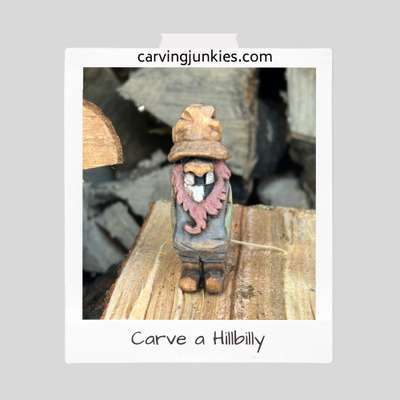
What you need to carve a hillbilly
I started with a wood block that is 1 x 1 x 3 inches (2.5 x 2.5 x 7.6 cm). Feel free to go bigger (just multiply the measurements) or use the free pattern at the end of the page if you want to use a band saw to roughout your hillbilly.
You will need a pencil or pen to sketch the guidelines. You can probably just use one knife, but I switched to a smaller detail knife for the beard and teeth. Remember to stop and strop every 20 minutes. I also used a U-gouge to carve the nostrils, but will provide an alternative method if you don't have one.
Make sure to wear a carving glove for safety. If you like to carve over your lap, protect your vital leg arteries with something hard.
Carve a hillbilly overview
I suggest that you watch this short video to see all the key steps to carve a hillbilly before you begin carving.
Set up your wood block
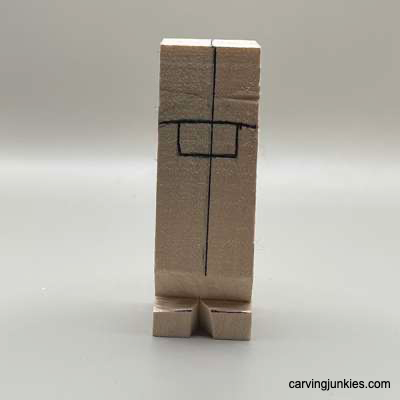
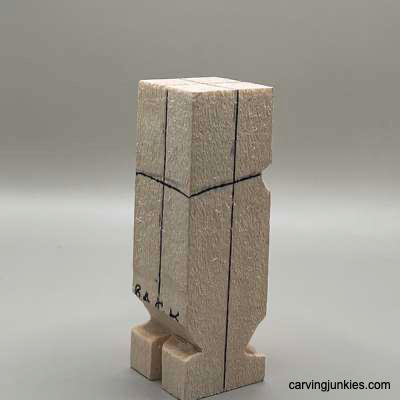
Draw your centerlines. Mine are about 1/2 inch (1.3 cm) on each side (photos 1,2). I also added similar centerlines to the other sides (not pictured).
On the front, draw a guideline about 1/4 inch (0.6 cm) from the bottom (photo 1), which will be the top of the boots.
Add a guideline about 1/2 inch (1.3 cm) from the bottom (photo 2), which will be the bottom of the tush.
You may also want to mark your piece on the front and back (photos 1,2). It’s easy to forget once you start carving!
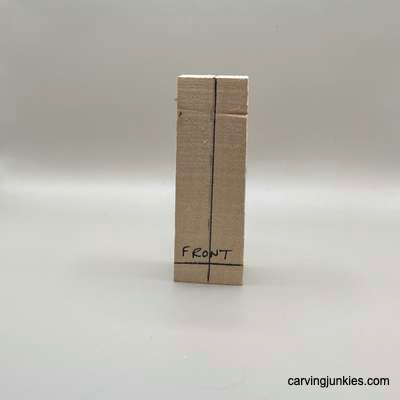 1. Front guidelines are drawn
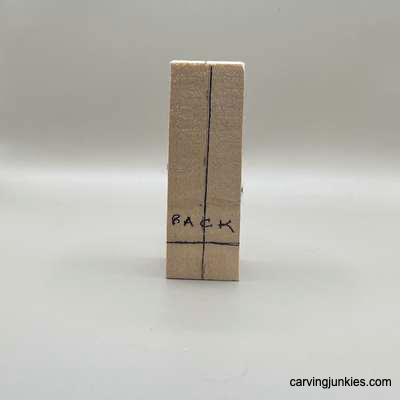 2. Back guidelines are drawn
Make your first cuts
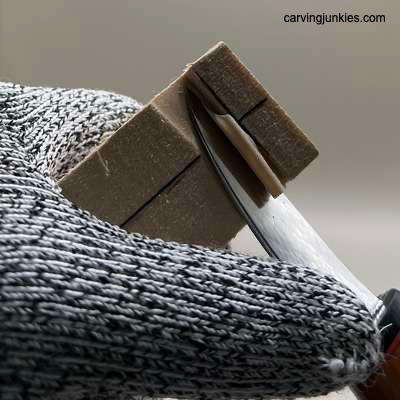
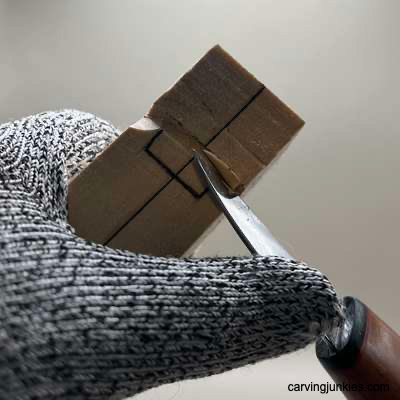
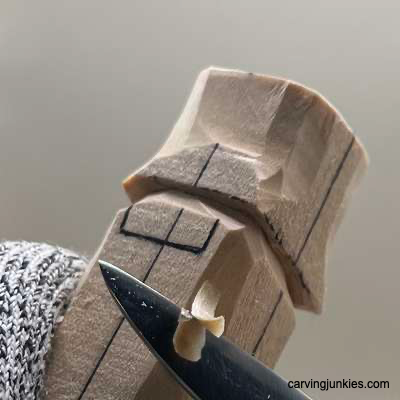
Use stop cuts in each corner to set up the feet of your hillbilly (photo 3). Then, remove wood at an angle (photo 4). Repeat this process on the back side (photo 5).
Continue removing wood at an angle on the front and back. When finished your piece should look like photo 6.
Use a V-cut to notch the feet on the front and back (photo 7).
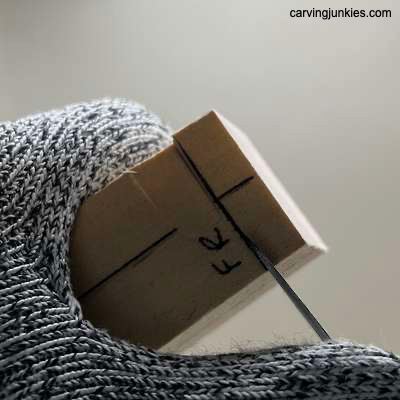 3. Making a stop cut
 4. Removing wood
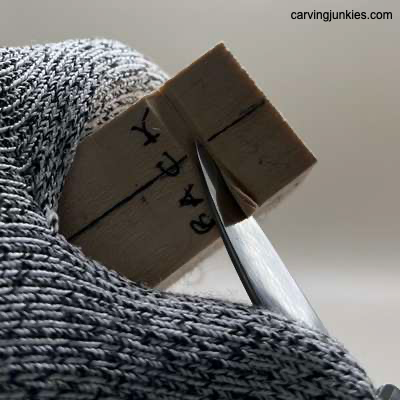 5. Carving the back
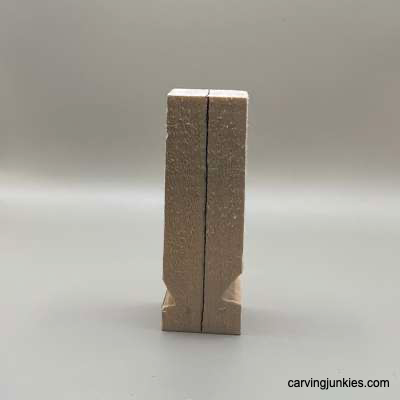 6. Progress of carving
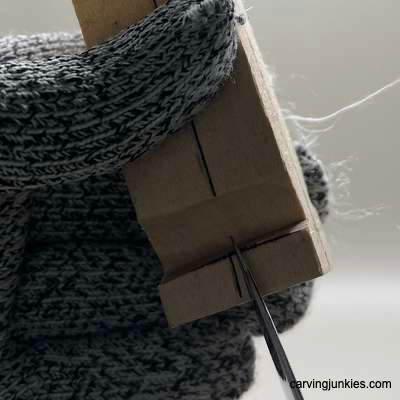 7. Carving the notch
Start the nose and hat
Sketch a square on the front for the nose (photo 8). Tip: Make it a little bigger than you want so you will have more than enough wood to work with.
Sketch the bottom of the hat all around. It should be slightly lower in the back (photo 9).
Separate the hat all around (photo 10). I used stop cuts, removing wood from underneath.
Round down all of the corners and start to remove wood to shape the hat (photo 11).
 8. Nose is sketched
 9. Hat is sketched around
 10. Separating the hat
 11. Rounding off corners
Shaping the hat
Remove wood all around the hat. Think of it like sharpening a pencil. I turn my wrist when I carve to slice wood off, creating a curve in the wood. When you get your desired shape, make a stop cut to form the brim, making a cut from above to meet your cut and remove wood (photo 12).
Carefully shape the brim (photo 13). Go slowly and be careful not to slice too much wood off. If you make a mistake wood glue is your friend! Tip: Keep the brim a little thick at this point and refine it later to avoid cracking the wood.
Separate and shape the nose. I used stop cuts to separate the nose, removing wood from around my cuts in the corners (photo 14). Then, I carved the middle (photo 15).
Carve off the corners on the nose. I used a #11 U-gouge to carve the nostrils (completed in photo 16). I rotated the U-gouge from side to side and removed the cut wood with my knife.
If you don't have a gouge, mark the wood you want to remove and use a knife. Go slowly to avoid breaking the wood. You can hold your knife like a pencil to make a curved cut, carefully removing wood around your cut.
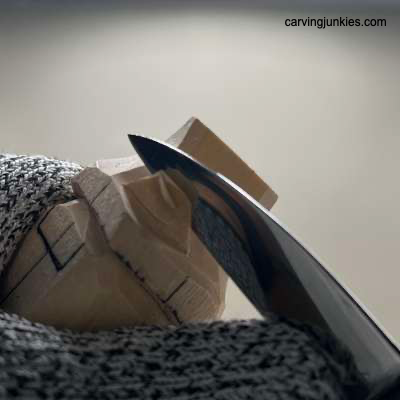 12. Carving the brim
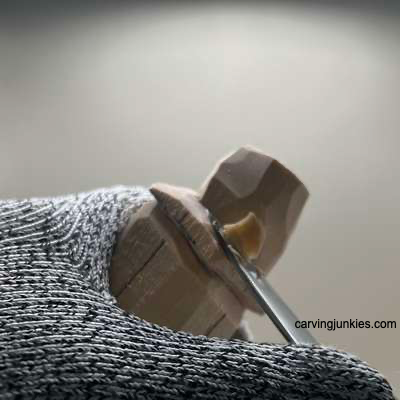 13. Shaping the brim
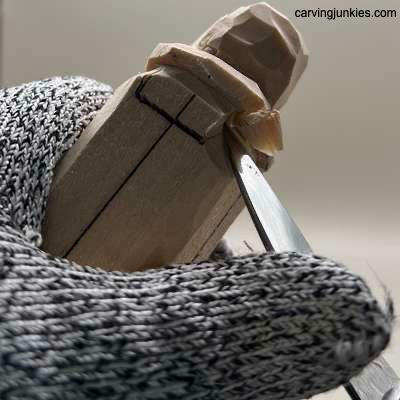 14. Starting the nose
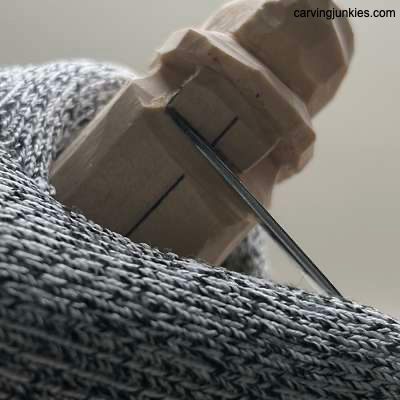 15. Roughing out the nose
Add some details
Sketch the mouth, teeth, and beard on the front (photo 16). Also, sketch the right (photo 17) and left arm (photo 18). I made the width of my arms a little less than 1/2 inch (1.3 cm).
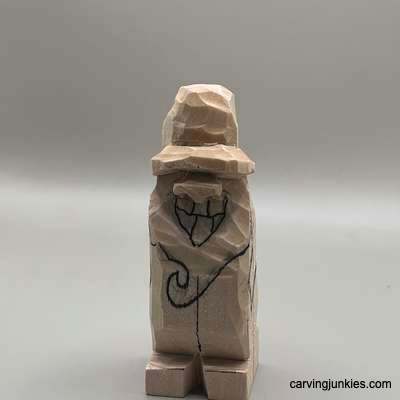 16. Beard and teeth are sketched
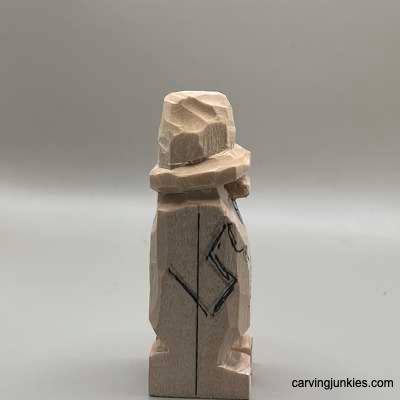 17. Right arm is sketched
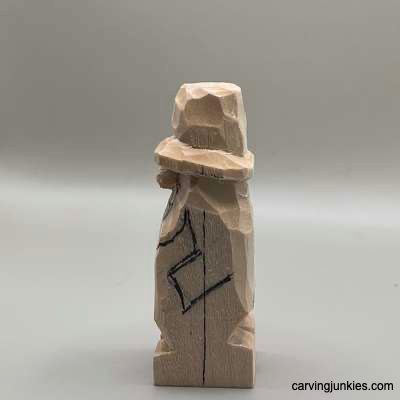 18. Left arm is sketched
Carve the details
I switched to a smaller detail knife to separate the teeth and beard (photos 19,20). You can use stop cuts, or run your knife along the guideline, removing wood from around your cuts.
Keep the beard thick and deep for now to avoid cracking the wood as you shape it. I made a series of random V-cuts along the beard to create flow on the edges of the beard (photo 21). Then, add some small V-cuts toward the mouth. You could also use a V-tool here. Take your time and be careful not to crack the wood. You also have the option to leave the beard as is (like photo 20).
Later, you will shave the beard down closer to the teeth.
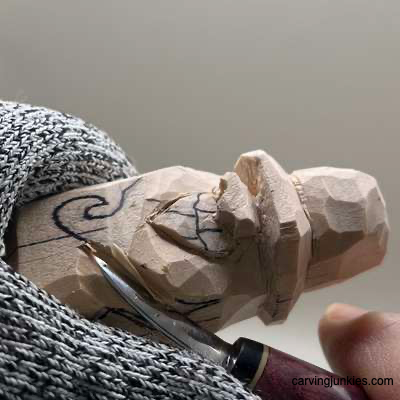 19. Separating the details
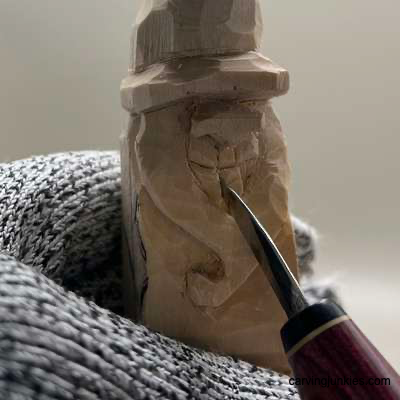 20. Separating the teeth
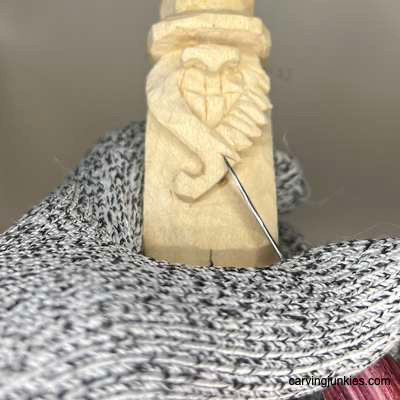 21. Carving the beard edge.
Carve the body of your hillbilly
I used stop cuts to separate the arms, and pyramid cuts to carve the crook in each arm (photo 21). Carve the arms on the back (photo 22). You can use a stop cut or move your knife along the guideline (photo 22) and make a second slicing cut.
Shape the legs and boots and sketch the boot guideline all around (photo 23), which you will separate with stop cuts, removing wood from underneath. I made the overalls look like they are above the boots.
I shaved the wood down on the beard (completed in photo 24). I also refined the teeth so the bottom teeth are set back from the top, and rounded the corners so the teeth aren’t uniform (completed in photo 25).
Make a deep stab cut on each side to suggest the eyes (photo 24).
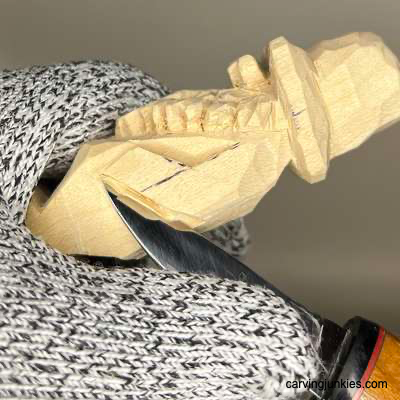 21. Separating the arm
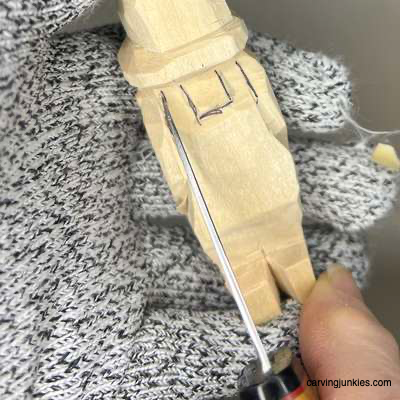 22. Carving the back
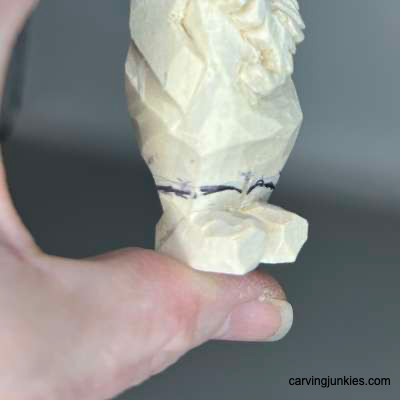 23. Bootline is sketched
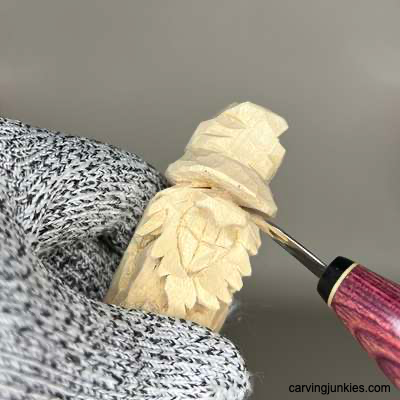 24. Deep knife cut for the eye
Refine your hillbilly wood carving
Add some wrinkles to the clothing, separate the legs on the front and back, and narrow and refine the shape of the hillbilly’s hat and overalls (photos 25-28).
Optional: I used a soft V-tool from Drake on the beard and hat. It's a great little tool, but Drake has been way behind on orders.
As a substitute, you can try this Flexcut soft V-tool here (affiliate link).Clean up your cuts prior to painting. If you use sandpaper, do not use your knife again as it can damage your knife.
When you are done, your hillbilly should look something like photos 25-28.
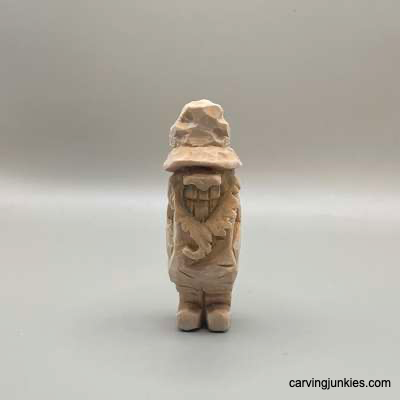 25. Front view of hillbilly
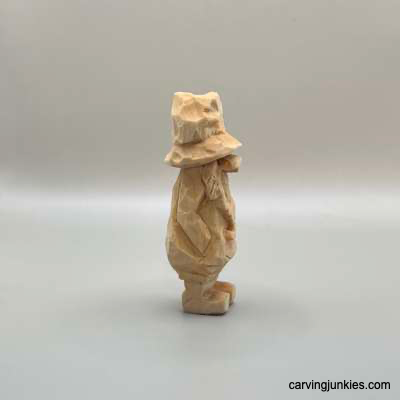 26. Right view of hillbilly
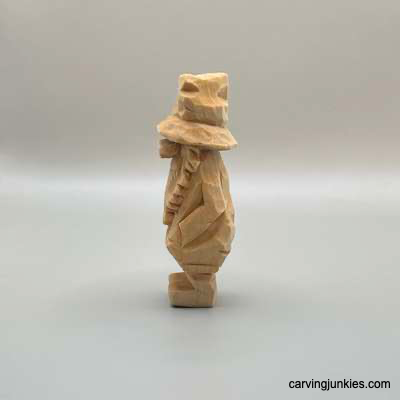 27. Left view of hillbilly
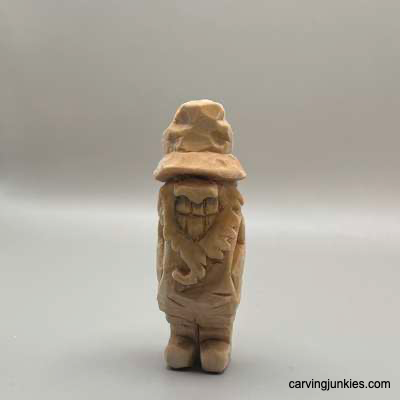 28. Back view
Painting your hillbilly
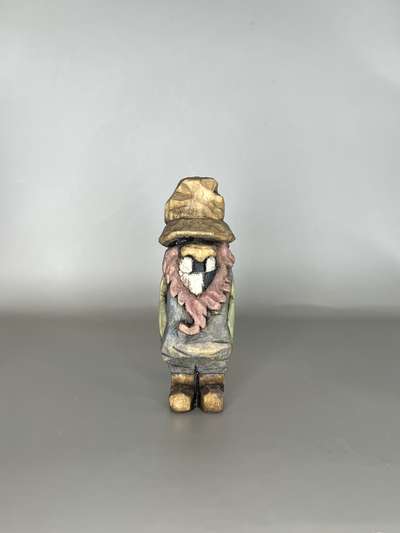
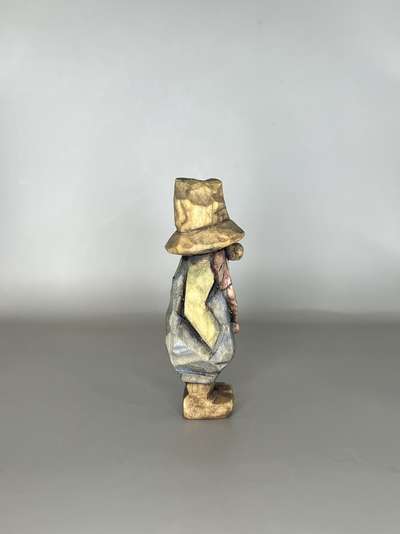
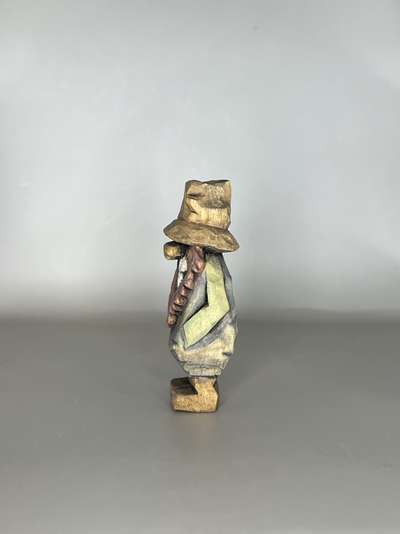
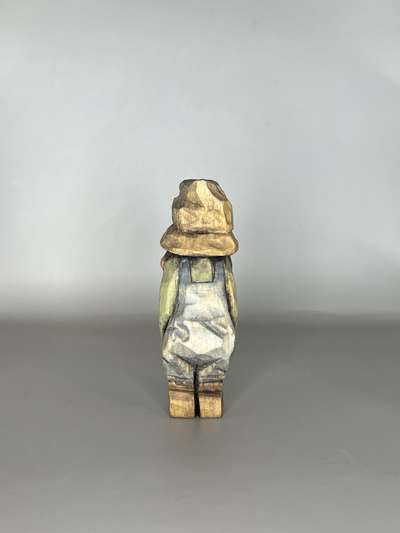
Use these paints to get a similar look to my hillbilly:
- Teeth: CraftSmart vanilla and Ceramcoat black wash.
- Beard: CraftSmart brick red wash first layer; FolkArt steel gray wash second layer.
- Shirt: FolkArt wild wasabi wash.
- Overalls: AppleBarrel blueberry frost wash.
- Boots: Apple Barrel classic caramel wash.
- Nose: walnut oil.
- Finish: I used Chris Hammack's recipe for "turd polish."" First you MUST spray with polyurethane spray (about 3 coats) to protect your carving and let dry overnight. The turd polish is 3 parts Minwax Aged Oak Gel Stain and 1 part mineral spirits. I apply all over the carving with a soft toothbrush (get into the nooks and crannies) and remove immediately with paper towels. Dispose of the paper towels outside your home as they can self combust. I keep a small amount of pre-made turd polish in a small jar that lasts me for months.
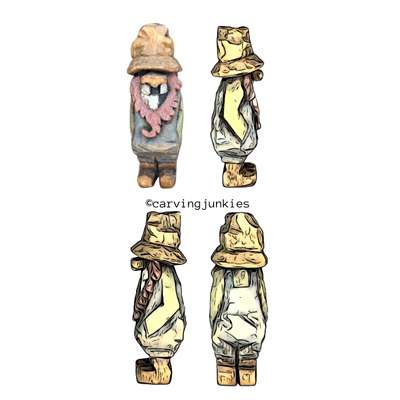
Carve a hillbilly pattern
Simply photocopy this pattern to size to fit any wood block.
Carve a hillbilly tutorial summary
- This step-by-step tutorial makes it easy to carve a cute little hillbilly.
- Add an artistic beard like I did for interest, or keep your beard simple (the choice is yours).
- You can also change the hat (make it pointed or more flat).
- Get more hillbilly wood carving design ideas here.
Try these knives!
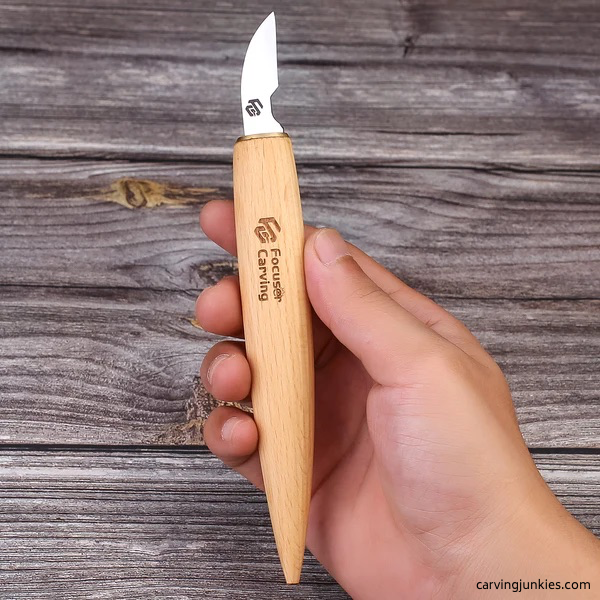
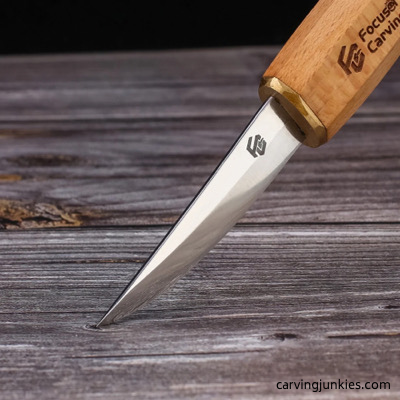
Focuser Carving knives are easy to use and hold an edge extremely well. They are also very sturdy, which is awesome for beginners! The FC001 is a great all-around carving knife. The FC016 is my go-to for making clean pyramid cuts with ease. I use the FC015 when I need to remove a lot of wood without too much effort. If you buy a knife with these affiliate links you help support our website without any extra cost to you. Thanks!

Get 50 Wood Carving & Painting Tips when you join our FREE Covered in Chips club.
Share this page
carvingjunkies.com never sells your personal information.
This site uses cookies for its operation and to enhance your experience. As an Amazon Associate and Focuser Carving affiliate we earn from qualifying purchases.
Home | About Us | Privacy Policy | Terms of Use | Contact | Sitemap